

There Is Still Time . . Brother
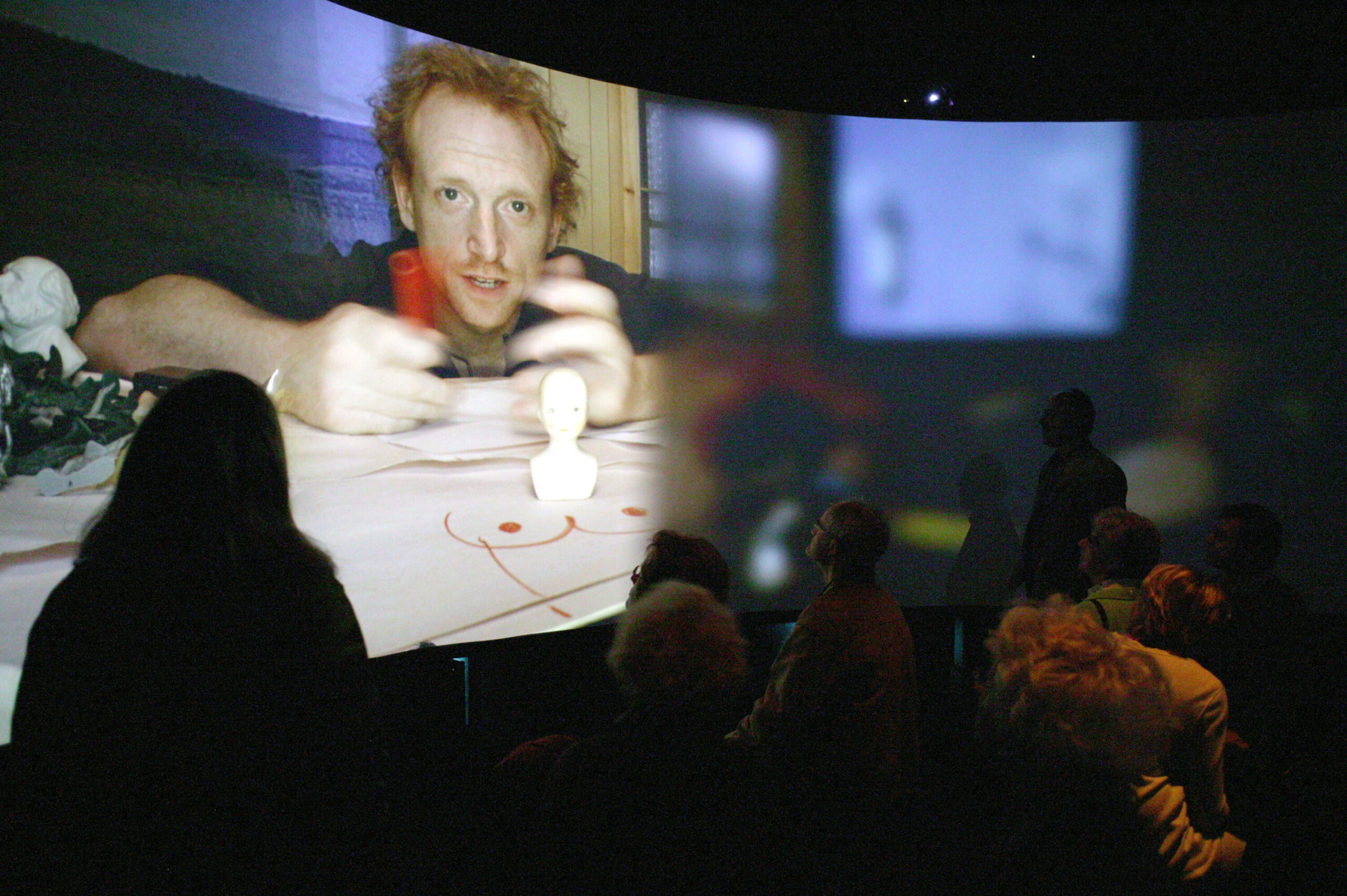
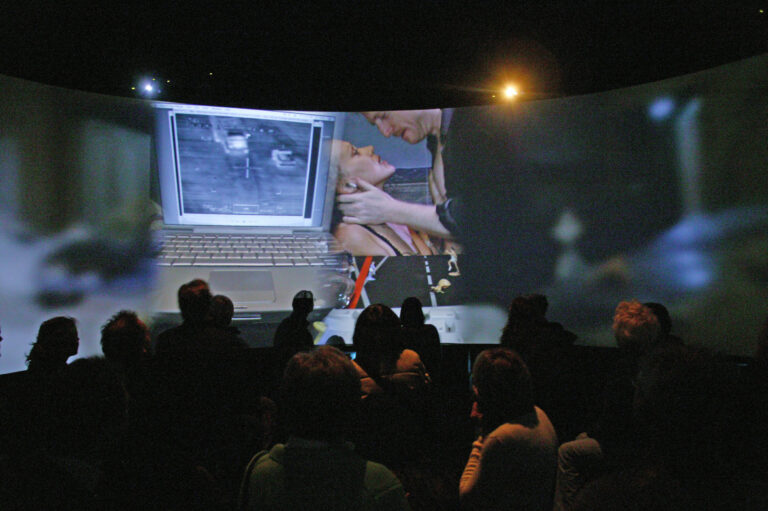
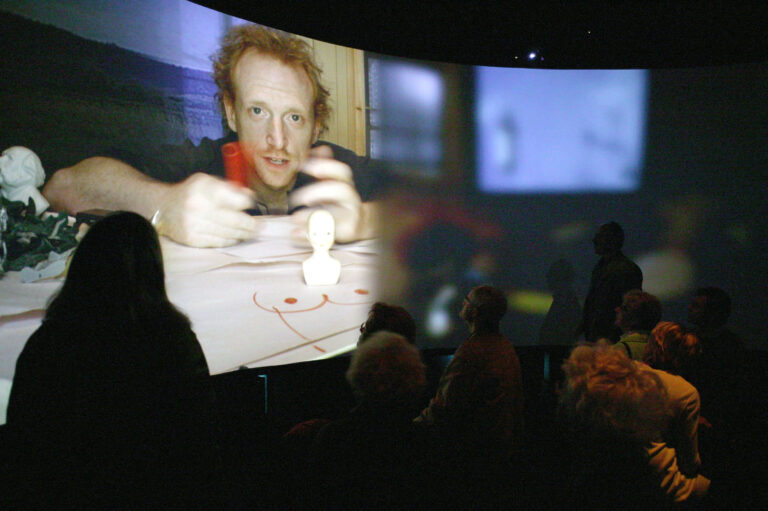
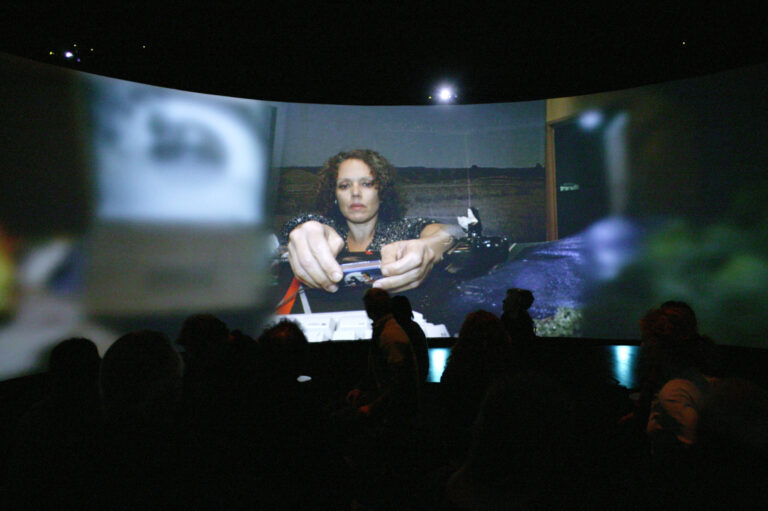
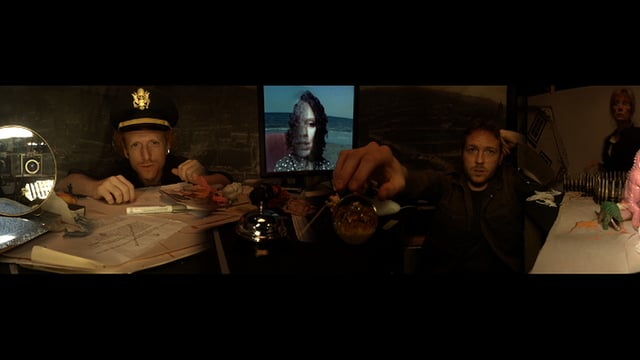
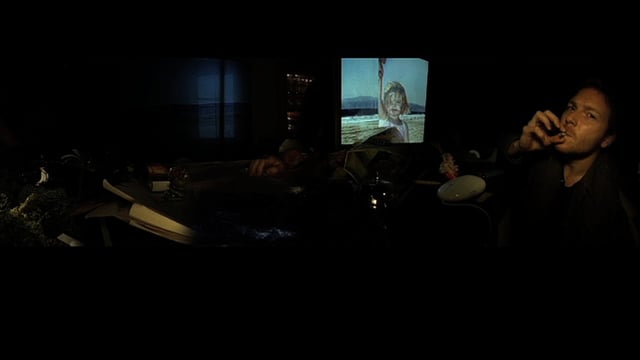
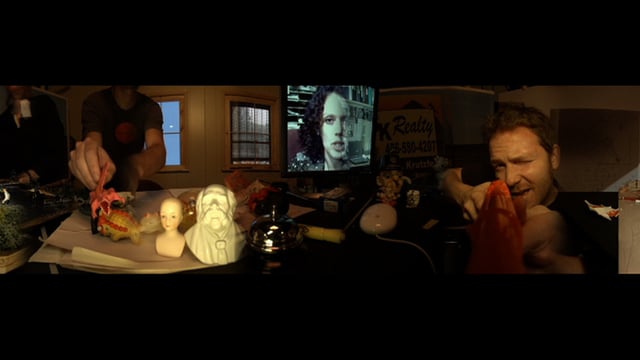
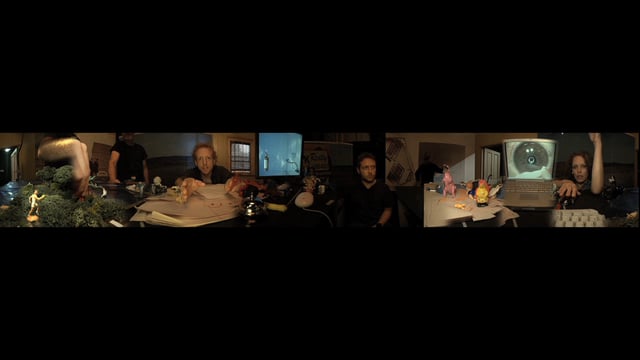
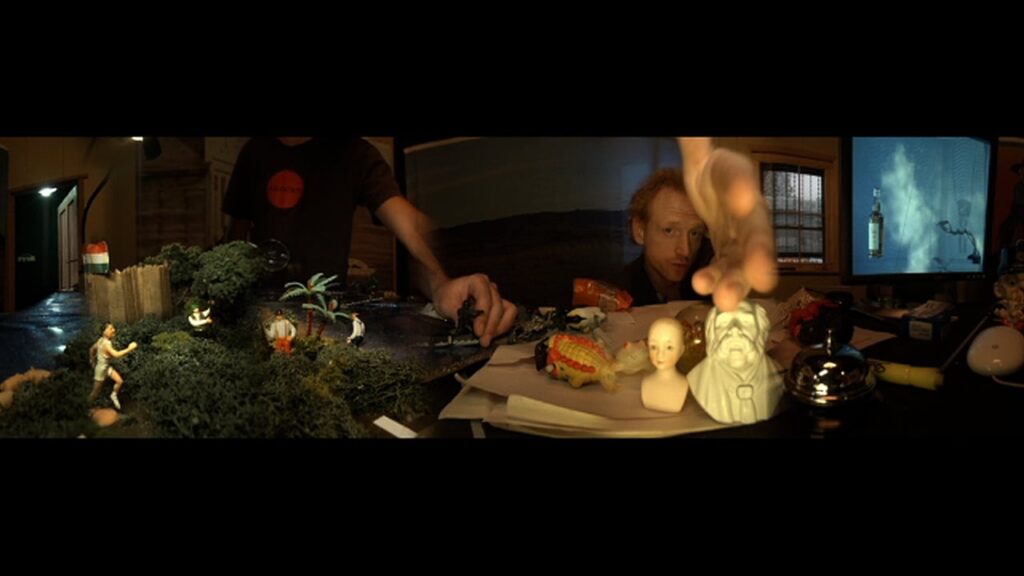
This interactive installation – which takes its title from a banner visible in the final scene of Stanley Kramer’s 1959 film, On the Beach, depicting a post-nuclear apocalypse Earth – is a film about war and the ways that individuals respond to war. The installation offers the viewer control of a narrative displayed within a 360-degree video panorama. Seated in a revolving chair in the center of the space, audience members take turns controlling a virtual “window” to highlight discrete aspects of a story about British and French troops battling for control of Fort Calypso (a battle site in the French and Indian War); joining the battle are grotesquely enlarged children’s toys vying for attention with politically minded bloggers, unsavory YouTube videos, and a mercurial host who attempts to articulate the implications of this unique “narrative space.” With each viewing, a new cinematic experience is spun out of choices made by the individual audience members controlling the virtual “window.”
Media & Ephemera
Dailies
From 2010 to around 2020, the Dailies was an online video series begun by the Group’s resident filmmaker at the time Zbigniew Bzymek. Most of Dailies videos follow his relationship to the company and its work, offering glimpses into our rehearsals and archives, as well as short films, interviews, and other behind-the-scenes materials. Dailies videos in the “from the archives” series were curated by the Group’s archivist Clay Hapaz. View more of the project here.
Production History
- Directed by: Elizabeth LeCompte
- Developed with: Jeffrey Shaw
-
- Directed by: Elizabeth LeCompte
- Developed with: Jeffrey Shaw
Production design, art direction, script, and performance by The Wooster Group -
- Directed by: Elizabeth LeCompte
- Developed with: Jeffrey Shaw
Production design, art direction, script, and performance by The Wooster Group -
- Directed by: Elizabeth LeCompte
- Developed with: Jeffrey Shaw
Production design, art direction, script, and performance by The Wooster Group -
- Directed by: Elizabeth LeCompte
- Developed with: Jeffrey Shaw
Production design, art direction, script, and performance by The Wooster Group -
- Directed by: Elizabeth LeCompte
- Developed with: Jeffrey Shaw
Production design, art direction, script, and performance by The Wooster Group
Additional Credits
Commissioned by the Experimental Media and Performing Arts Center (EMPAC) at Rensselaer Polytechnic Institute (USA)
Produced by EMPAC together with the UNSW iCinema Centre for Interactive Cinema Research (AUS), and the ZKM | Institute for Visual Media (D) and in collaboration with The Wooster Group
The Interactive Panoramic Cinema has been conceived of and designed by Jeffery Shaw. This includes the 360-degree interactive projection method whereby the user can shift the position of a viewing window (EVE/PLACE), iCinema’s 360-degree digital video camera (SPHERECAM) and the PanoramaScreen co-developed by ZKM.
EMPAC Production Team: Jonas Braasch, Kathleen Forde, Kimberly Gardner, Johannes Goebel, Shannon Johnson, CathyJo Kile, Jason Steven Murphy and Todd Vos
iCinema Production Team: Jarred Berghold, Volker Kuchelmeister, Damian Leonard, Sue Midgeley and Jeffrey Shaw
The Wooster Group Production Team: Joel Bassin, Yvan Greenberg, Clay Hapaz, Cynthia Hedstrom, Edward McKeaney and Kaneza Schaal
Zentrum für Kunst und Medientechnologie (ZKM) Production Team: Jan Gerigk, Arne Graesser, Manfred Hauffen, Petra Kaiser, Bernd Lintermann and Silke Sutter
SPHERECAM cinematography, production pre-view system and post-production: Volker Kuchelmeister (iCinema)
Real-time Image Processing and Projection System for Complex Surfaces: Bernd Lintermann (ZKM)
Panoramic projection screen engineering: Huib Nelissen Decor en Constructiewerken (NL)
Audio Design Concept: Johannes Goebel (EMPAC)
Sound recording, editing and post-production: Todd Vos, Geoff Abbas, Matt Tierney and Dan Valente
Localization Capturing System for Moving Sound Sources and Virtual Microphone Control for Sound Projection Systems: Jonas Braasch, Communication Acoustics Research Lab, Rensselaer
Excerpts from the following materials are included in the text: transcripts from discussions among Jeffrey Shaw, Johannes Goebel and The Wooster Group; Pioneer Dogs, a film script by Adam Edwards; On The Beach (1959), a film by Stanley Kramer; and Rosie O’Donnell’s blog.
Producers: Johannes Goebel and Kathleen Forde (EMPAC)
With support from the Jaffe Fund for Experimental Media and Performing Arts